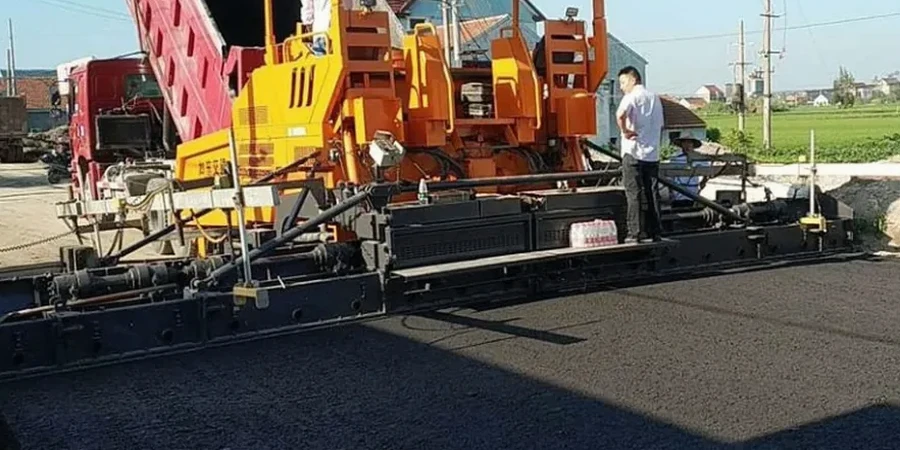
Roadway engineering in Brampton forms the backbone of safe, efficient, and durable transportation infrastructure across one of Canada's fastest-growing cities. This category encompasses the full spectrum of pavement design, subgrade evaluation, and structural analysis required to support everything from quiet residential crescents to high-volume arterial roads and heavy truck routes. With Brampton's population surpassing 700,000 and its strategic position within the Greater Toronto Area logistics network, the demand for properly engineered roadways has never been greater. A well-designed roadway must resist the punishing freeze-thaw cycles of Southern Ontario winters, accommodate swelling traffic volumes, and meet the long-term performance expectations of both the City of Brampton and the Region of Peel.
Brampton's underlying geology presents distinct challenges that directly influence roadway design decisions. Much of the city sits on glacial till deposits, including the Halton Till, which consists of a silty clay matrix with varying proportions of sand and gravel. These soils can be highly moisture-sensitive and prone to frost heave if not properly managed. In lower-lying areas near the Etobicoke Creek and Credit River valleys, designers frequently encounter soft organic silts and clays with low bearing capacity. This makes a thorough CBR study for road design essential before any pavement structure is finalized. The California Bearing Ratio test, adapted through Ontario's site investigation protocols, determines the strength of the native subgrade and dictates whether soil stabilization, geogrid reinforcement, or full-depth excavation and replacement is required to create a competent working platform.
All roadway projects in Brampton must comply with a rigorous hierarchy of standards led by the Ontario Provincial Standard Specifications (OPSS) and the Ontario Provincial Standard Drawings (OPSD). The Ministry of Transportation of Ontario (MTO) publishes key references such as the Pavement Design and Rehabilitation Manual, which provides the framework for both empirical and mechanistic-empirical design methodologies. At the municipal level, the City of Brampton's Development Design Guidelines and Standard Specifications impose additional requirements, often exceeding provincial minimums for subdivision roads and collector streets. The Transportation Association of Canada's Pavement Asset Design and Management Guide further influences local practice, particularly regarding life-cycle cost analysis and sustainable material selection. Designers must also adhere to the Occupational Health and Safety Act for all field investigations and construction operations.
The two primary structural approaches within this category address fundamentally different load distribution mechanisms. Flexible pavement design uses multiple granular layers and one or more asphalt concrete lifts to transmit wheel loads to the subgrade through grain-to-grain contact. This system dominates Brampton's residential subdivisions and collector roads due to its staged construction capability and ease of future utility cuts and repairs. In contrast, Rigid pavement design employs a Portland cement concrete slab that distributes loads through beam action over a wider area. While less common in local residential streets, rigid pavements are increasingly specified for Brampton's high-stress intersections, bus rapid transit corridors, and industrial access roads where resistance to rutting from standing or slow-moving heavy vehicles is paramount. Each design type demands precise material characterization, from Marshall mix designs for asphalt to compressive strength and flexural testing for concrete.
Flexible pavements use layered granular bases topped with asphalt concrete and distribute loads through grain-to-grain contact, making them adaptable to staged construction and utility work. Rigid pavements use a structural Portland cement concrete slab that spreads loads through beam action. While flexible designs dominate Brampton's residential streets, rigid designs are often preferred for high-stress intersections, transit corridors, and industrial routes where rutting resistance is critical.
CBR studies measure the bearing strength of the native subgrade soil, which is essential in Brampton due to variable conditions like moisture-sensitive Halton Till and soft organic deposits near watercourses. The results directly determine the required pavement structure thickness, the need for subgrade stabilization, and compliance with City of Brampton and OPSS standards, preventing premature failures from inadequate support.
Roadway design must comply with Ontario Provincial Standard Specifications (OPSS), Ontario Provincial Standard Drawings (OPSD), and the MTO Pavement Design and Rehabilitation Manual. At the municipal level, the City of Brampton's Development Design Guidelines and Standard Specifications impose additional requirements. The Transportation Association of Canada's Pavement Asset Design and Management Guide also influences local practice.
Brampton's glacial till soils are highly susceptible to frost heave during Southern Ontario's freeze-thaw cycles, while soft organic silts in valley areas provide poor bearing capacity. Without proper geotechnical investigation and drainage design, these conditions lead to differential heaving, spring thaw weakening, and accelerated pavement cracking. Robust subgrade preparation and frost protection layers are essential to long-term performance.