← Home · Investigation

Exploratory Test Pits in Brampton: Subsurface Verification for Builders

Together, we solve the challenges of tomorrow.

LEARN MORE →

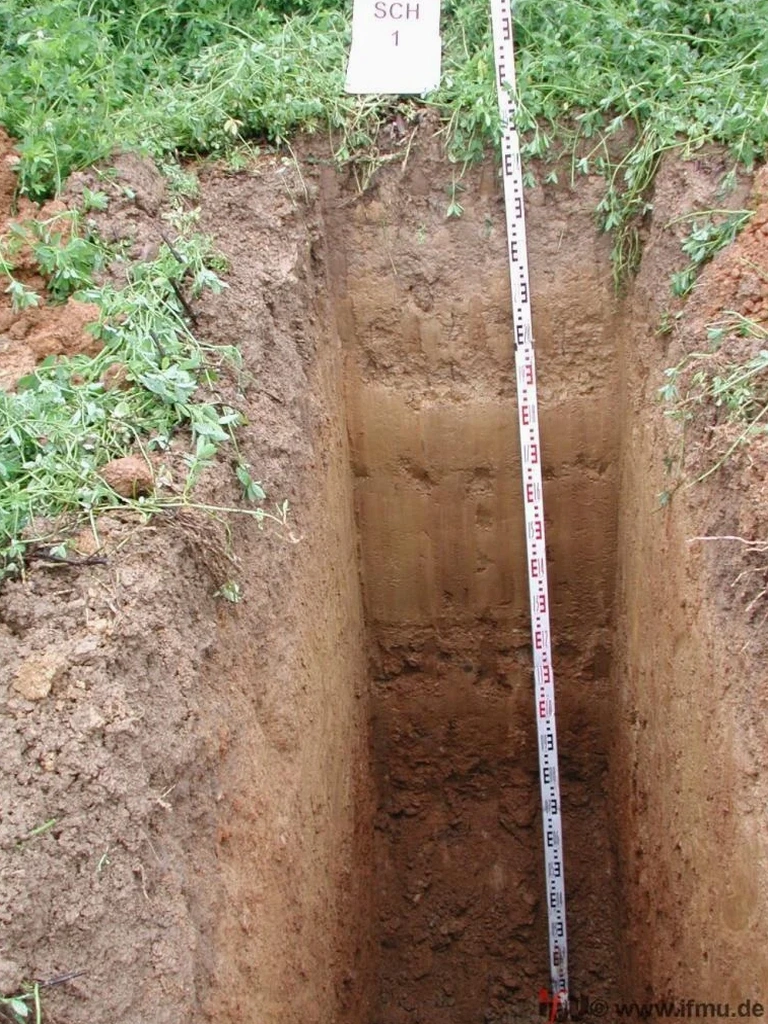
In Brampton, more than a few foundations hit trouble because of undocumented fill from the 1970s and 1980s orchard conversions. An exploratory test pit removes the guesswork. We open a vertical excavation right where your footing or detention tank will sit, log the soil profile, and photograph every lift. The Halton Till beneath the surface can be competent, but the top three to five feet often hold sandy silt, construction debris, or buried topsoil that a desktop report will never flag. We pair the pit with in-situ permeability tests for stormwater infiltration design and grain-size sampling when the fines content looks borderline for frost heave. The result is a straightforward, defensible record for your permit package.

A 40-inch bucket in the right spot gives you more certainty than three boreholes in the wrong formation.

How we work

East of Highway 410, we encounter the fine-grained Peel Plain deposits with high clay content and slow drainage. West toward the Escarpment, the till transitions to stonier, denser material that demands a machine with breakout force. In both settings, an exploratory test pit lets us measure the seasonal water table directly, not infer it from a monitor well a hundred meters away. We log according to ASTM D2488, note mottling and oxidation zones that signal a fluctuating water table, and collect bulk samples for Atterberg limits when the clay fraction looks plastic. For deeper bearing verification, we often recommend an SPT drilling program below the pit floor to quantify strength in the competent till.
Exploratory Test Pits in Brampton: Subsurface Verification for Builders
Technical reference image — Brampton

Local considerations

Brampton sits at roughly 230 m elevation with buried valleys carved into the shale bedrock. Those valleys filled with soft clay and organic silt that compress under load. Without an exploratory test pit, a builder can place a footing on six feet of firm-looking crust and never see the twelve feet of compressible material below it. Differential settlement follows. The other risk is groundwater. In Fletcher's Creek and Etobicoke Creek corridors, the water table rises fast after spring melt, turning an open excavation into a slurry if it is not planned for. A pit inspection gives you that data before the excavator leaves the site. The City of Brampton's building department accepts pit logs as supplementary geotechnical evidence when stamped by a licensed engineer.

Need a geotechnical assessment?

Reply within 24h.

Email: contact@geotechnicalengineering.co

Typical values

ParameterTypical value
Typical depth in Brampton till2.5–4.6 m (8–15 ft)
Bucket width600–900 mm (24–36 in)
Logging standardASTM D2488 / CSA A23.3 compatible
Shoring requirementOHSA Type 3 soil, trench box beyond 1.2 m
Sample mass per layer20–30 kg for lab index testing
Infiltration testingConstant-head permeameter in pit floor
Report turnaround3–5 working days with photo log

Other technical services

01

Foundation Verification Pit

Single pit at the proposed footing elevation. Logs the bearing stratum, confirms absence of fill, and photographs the subgrade condition for the permit file.

02

Infiltration Test Pit

Pit excavated to the proposed infiltration gallery depth with in-situ constant-head permeability test. Required for LID stormwater features under TRCA jurisdiction.

03

Bulk Disturbed Sampling

Collection of 20–30 kg samples per stratum for Proctor, grain-size, and Atterberg limits. We chain-of-custody the material to our CSA-qualified lab.

Applicable standards

ASTM D2488 – Visual-Manual Soil Description, OHSA Regulation 213/91 – Trenching and Shoring, CSA A23.3 – Concrete Structures (foundation subgrade)

Common questions

How much does an exploratory test pit cost in Brampton?
Do I need a test pit if I already have a borehole log?

Often, yes. A borehole gives you a 50 mm diameter view of the subsurface. A test pit exposes a full trench wall, so you can see layering, buried organics, and groundwater seepage that a split-spoon sample misses entirely.

How deep can you go with an exploratory pit in Brampton's soil?

In the stony Halton Till west of the city, 4.5 m is usually the practical limit with a mid-size excavator. In the Peel Plain clays east of Highway 410, we can reach 5 m, but OHSA requires a trench box beyond 1.2 m depth regardless of soil type.

What happens if groundwater fills the pit during excavation?

We record the depth where water first enters and the stabilized level after 20 minutes. If the pit walls become unstable, we backfill immediately and switch to a CPT or SPT approach for the deeper data.

Is a test pit report accepted by the City of Brampton for a building permit?

The City accepts pit logs as part of a geotechnical submission when the log follows ASTM D2488 and the report is sealed by a Professional Engineer licensed in Ontario. We provide both.
Location and service area

We serve projects across Brampton and surrounding areas.

View larger map